

Back training is easy to under-plan: a few rushed rows at the end of a session rarely make a balanced programme. A well-structured gym back workout combines vertical pulls, horizontal rows and sensible trunk work, with exercise choices that suit your experience, equipment and recovery.
Useful gym back workouts do not need a long list of complicated movements. This guide covers six practical exercise options—lat pulldown, seated cable row, chest-supported row, single-arm dumbbell row, bent-over barbell row and deadlift—then shows how to arrange a manageable two-session template. Choose the variations that feel controlled and suit your current training experience.
Read on to find out why back training deserves equal billing with the rest of your programme.
Key Takeaways
- The back is made up of several muscle groups, including the lats, traps, rhomboids and erector spinae, and all of them need attention for balanced development.
- Six exercises form a strong, simple foundation for any back workout at gym: lat pulldown, seated cable row, chest-supported row, single-arm dumbbell row, bent over barbell row and deadlift.
- Begin with a manageable amount of weekly work that you can perform with good technique and recover from; there is no single set target for every lifter.
- Good form and steady progressive overload matter more than lifting heavy on day one.
- A simple, repeatable plan beats a complicated one you will not stick to.
Why Back Training Belongs in a Balanced Programme

The back muscles contribute to pulling strength and help control the position of your shoulders and trunk during many lifts. Rows and pulldowns can build back-specific strength, while the erector spinae help resist unwanted movement of the torso. How much this carries over to squats, deadlifts or sport depends on the person and the wider programme—there is no single exercise that guarantees better performance.
Back training is one part of a balanced strength routine alongside pushing, leg and trunk exercises. It is not a treatment for rounded shoulders or back pain, and posture is influenced by more than the strength of one muscle group. Aim for a varied programme rather than trying to correct a perceived problem with extra rows alone.
If you want to complement gym-based pulling with simple movements outside the weights room, see Guru Muscle's bodyweight exercises for strength guide. Use it as a separate training resource, not a substitute for choosing exercises that suit your own ability.
What Muscles Make Up the Back?
The back is not one single muscle but a group of muscles working together, and understanding the main players makes every exercise below easier to follow.
- Lats (latissimus dorsi): sit across the sides of your back and pull your arms down and in, giving the back its width.
- Traps: run from your neck across your shoulders and add thickness to the upper back.
- Rhomboids: sit between your shoulder blades and pull them back and together.
- Erector spinae: runs down either side of the spine and keeps your back stable and upright under load.
You do not need to overthink this list while training, because most gym back workouts hit several of these areas at once rather than isolating just one. A row, for example, typically works the lats, rhomboids and traps together in a single movement, which is exactly why compound exercises form the backbone of any solid back routine.
The 6 Best Gym Back Exercises
The 6 best gym back exercises on this list cover every major pulling pattern, from vertical pulls like the lat pulldown to the hip-hinge power of the deadlift. Combining all six into your training gives you a well-rounded, strong back rather than one that is only developed in the areas you find easiest or most enjoyable to train. Each movement below targets the back slightly differently, and the form cues are simple enough for beginners while still demanding proper technique from experienced lifters.
1. Lat Pulldown
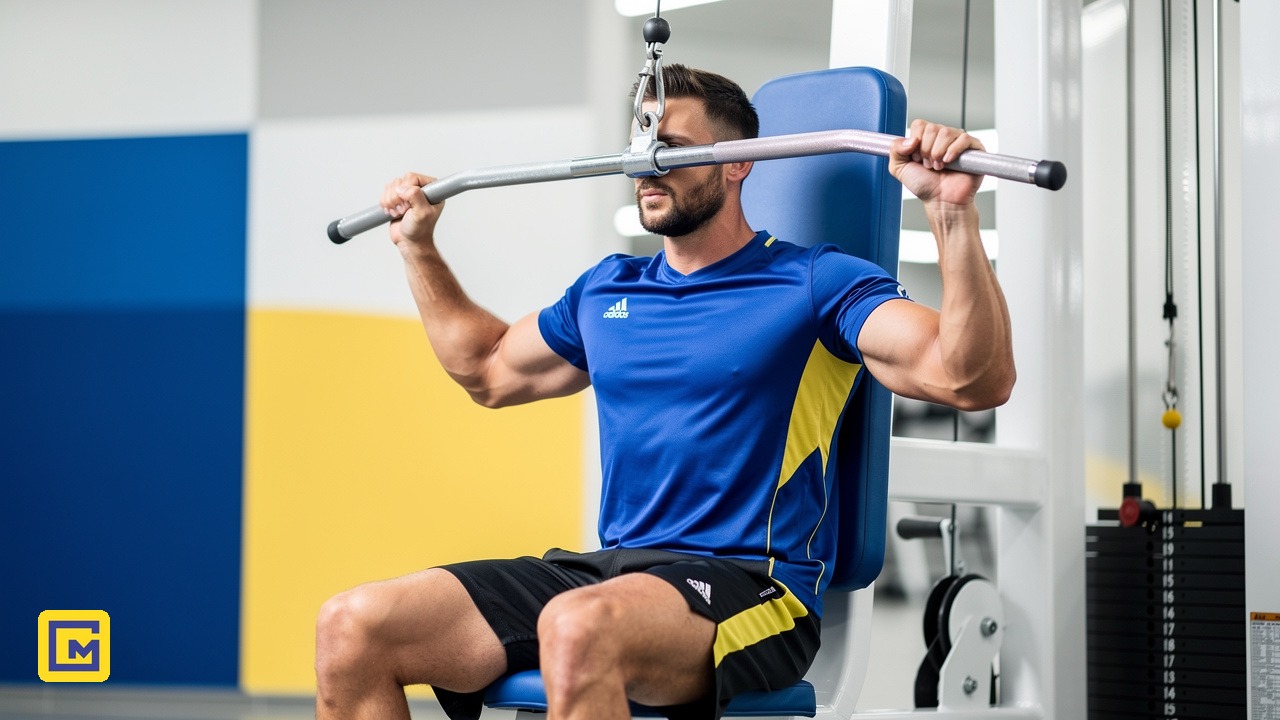
The lat pulldown is one of the best starting points for building back strength, particularly for lifters who cannot yet do a bodyweight pull-up. It targets the lats and teres major directly, and because the resistance is adjustable on a cable stack, you can build pulling strength gradually before progressing to pull-ups later on. The machine setup also lets you complete more sets and reps with controlled fatigue, which adds useful training volume without excessive strain.
To perform it well, grip the bar just outside shoulder width and drive your elbows down and back as you pull. Avoid leaning back excessively or using momentum, since this shifts the work away from the lats and onto the lower back.
2. Seated Cable Row
The seated cable row is a beginner-friendly exercise that keeps constant tension on the back throughout the entire range of motion. Unlike free weight rows, the cable never lets up, so the mid-back and lats stay under load from the start of the pull to the finish. This guided movement pattern, combined with easily adjustable weight, makes it a reliable option whether you are new to the gym or simply want a lower-fatigue addition to leg or push days.
Keep your chest up and pull your elbows back toward your hips rather than yanking with your arms. Avoid rounding through the lower back as you reach forward, since this reduces the stretch on the lats and increases strain on the spine.
3. Chest-Supported Row
The chest-supported row reduces the amount of lower-back bracing needed compared with an unsupported row. By resting your chest against a pad, you can focus on a controlled pull while the lats and upper-back muscles do most of the work. It can be a useful option when you want to train your back without adding as much torso-stabilisation demand as a bent-over row.
Keep your chest flat against the pad throughout the set, and squeeze your shoulder blades together firmly at the top of each rep. This pause is what creates the strongest contraction in the upper back muscles.
4. Single-Arm Dumbbell Row

The single-arm dumbbell row is a unilateral exercise, meaning it trains one side of the back at a time rather than both together. This matters because bilateral movements like barbell rows often let a dominant side take over without you noticing, which can create strength imbalances over months of training. Working one arm at a time forces each side to pull its own weight, literally, and it needs nothing more than a bench and a single dumbbell, making it easy to do at a commercial gym or at home.
Keep your back flat and pull your elbow up and back rather than out to the side. Avoid twisting through the torso as you lift, since rotating takes tension away from the lats.
5. Bent Over Barbell Row
The bent-over barbell row trains the lats and upper back while the hips, legs and trunk help hold your position. It is a useful option if you can maintain a stable hinge and control the bar. An overhand or underhand grip can change how the movement feels, but neither grip isolates one muscle completely. If your lower back tires before your upper back, choose a chest-supported or cable row instead.
Keep a neutral spine and brace your core before every rep to avoid rounding, and if you want visual form cues, a detailed breakdown on maximizing whole back growth on the barbell row can help you feel the lift in the right muscles. Pull your elbows back toward your hips rather than up toward your ears, which keeps the lats doing most of the work.
6. Deadlift
The deadlift is a compound hip-hinge lift that trains the glutes and hamstrings while the trunk and back muscles work to keep the bar close and the torso controlled. It can be part of a strength programme, but it is not compulsory for building the lats or upper back: rows and pulldowns provide more direct pulling work. Include deadlifts only if they fit your goals, technique and recovery, and learn the movement with an appropriate load.
Keep your spine neutral, fix your gaze on a point ahead of you, and hinge from the hips as you set up. Drive through the floor while keeping the bar close to your body throughout the entire lift.
Choosing Loads, Sets and Reps
Use a load that lets you move through a comfortable range of motion without swinging, rushing or losing your position. As a general starting point, many gym-goers use 8–12 controlled repetitions for pulldowns and rows, and slightly lower repetitions for heavier compound lifts. These are practical ranges, not rules: adjust them to your experience, the exercise and any guidance from your coach.
Finish most working sets with about two or three good repetitions still possible. When you can complete the top end of your target range with consistent technique, increase the load by a small amount and build the repetitions again. If your form changes to move the weight, the load is probably too heavy for that set.
Rest long enough to repeat quality reps. Around 90–150 seconds is a useful starting point for demanding rows and pulldowns; lighter accessories may need less. Take more rest when you need it. Progress is not measured by rushing between sets.
A Simple Back Training Plan You Can Follow

You do not need to perform all six exercises in one workout. Start with two or three movements per session and add work only when you are recovering well. The example below spreads different pulling patterns across two sessions; it is a template to adapt, not a prescription for every person.
The Australian Government adult movement guidelines recommend muscle-strengthening activities on at least two days each week. That is a whole-body health guideline; it does not mean every muscle group must be trained twice weekly. Your own training frequency should fit your schedule, experience and recovery.
Day A: Vertical Pull and Supported Row
- Lat pulldown: 2–3 sets of 8–12 controlled repetitions.
- Chest-supported row: 2–3 sets of 8–12 repetitions.
- Optional single-arm dumbbell row: 1–2 sets of 10–12 repetitions per side if you have time and recover well.
Day B: Horizontal Pull and Row Variation
- Seated cable row: 2–3 sets of 8–12 repetitions.
- Bent-over barbell row: 1–2 sets of 8–10 repetitions, provided you can maintain a comfortable, controlled hinge. Choose a chest-supported row instead if that position does not suit you.
- Deadlift: optional. Keep it in your programme if you are already practising the lift for a wider strength goal; it is not required for a back-focused session.
Leave a day between these sessions where practical. If you are new to resistance training, begin at the lower end of the sets shown and ask a qualified exercise professional to check your technique. More work is not automatically better if it affects the quality of later sessions.
How to Progress Without Chasing Weight
Record the exercise, load and repetitions you complete. First aim to add a repetition while keeping the same range of motion and control. Once you reach the top of your target range comfortably, increase the load slightly. If performance drops for several sessions or fatigue builds up, reduce the work temporarily or consider a planned easier week rather than forcing progress.
Training Safety and When to Get Advice
Warm up, learn the movement before increasing the load, and stop an exercise if it causes pain. Healthdirect recommends gradually building strength, using correct technique and avoiding exercises that cause pain. If you have an injury, persistent symptoms, a chronic health condition or are unsure what is suitable, speak with your doctor, physiotherapist or an appropriately qualified exercise professional.
Training Tips, Recovery and Gym-Ready Gear
Use a controlled range of motion that feels comfortable for your body. Keep your torso stable where the exercise calls for it, avoid using momentum to finish repetitions, and choose a variation that lets you maintain technique. Training tops should allow you to move your shoulders freely without distracting bunching or restriction.
If you train at home or want a band-assisted pulling variation, Guru Muscle stocks the FKN Resistance Bands 3 Pack, with three resistance levels. Use an appropriate band and secure anchor for the exercise, and check the band for damage before each session. For gym clothing, browse the men’s gym tops collection and choose a fit that allows comfortable movement.
Training provides the stimulus; recovery, adequate food and sleep support adaptation. For more ideas on lighter days, see our active recovery guide. If fatigue is accumulating, a planned deload week may help you manage training load.
The Takeaway
A balanced back workout is built around consistent, controlled pulling—not a race to lift the heaviest weight or complete every exercise in one session. Choose a vertical pull and one or two row variations, practise the technique, track your progress and adjust the amount of work to your recovery. Deadlifts can complement a wider strength programme, but they are optional for a back-focused routine.
Keep the plan simple long enough to assess whether your strength and technique are improving. If an exercise causes pain or you are unsure how to perform it, stop and get appropriate advice rather than pushing through.
Frequently Asked Questions
Do I Need All 6 Exercises In One Session?
Not necessarily, it depends on your training split. If back is part of a full upper body day, 1 or 2 exercises are usually enough, while a dedicated back session can comfortably use all 6 for fuller coverage of the muscle group.
Is It Okay To Do Back Workouts With Just Dumbbells?
Yes, dumbbells can cover most of this plan, including single-arm rows and chest-supported row variations performed on an incline bench. A long resistance band is also a budget-friendly way to add pulldown-style movements if you are training at home.
Should I Train Back And Biceps On The Same Day?
Yes, back and biceps are both pulling muscles and pair well together in one session. Most back exercises already recruit the biceps to some degree, which makes this combination an efficient use of your gym time.
How Long Until I See Results From Back Training?
It varies with training experience, consistency, nutrition, sleep and individual factors. Track your loads, repetitions and technique over time rather than relying on a fixed timeline or a promise of visible change by a certain date.
What Should I Wear For Back Day At The Gym?
Choose comfortable clothing that allows your shoulders to move freely. You can browse Guru Muscle’s men’s gym tops for training options.
Sources and Further Reading
- Australian Government: Recommendations for adults aged 18–64 — whole-body physical activity and muscle-strengthening guidance.
- Healthdirect: Strength training for beginners — safe progression, technique, warming up and when to seek advice.
- Jeff Nippard: The Best and Worst Back Exercises (Ranked by Science) — further viewing from an independent creator; Guru Muscle has not reused the creator’s footage or script.
This article is general fitness information, not individualised medical advice. If you have an injury, persistent pain, a chronic condition or are unsure which exercises are appropriate, seek advice from a qualified health professional or appropriately qualified exercise professional.